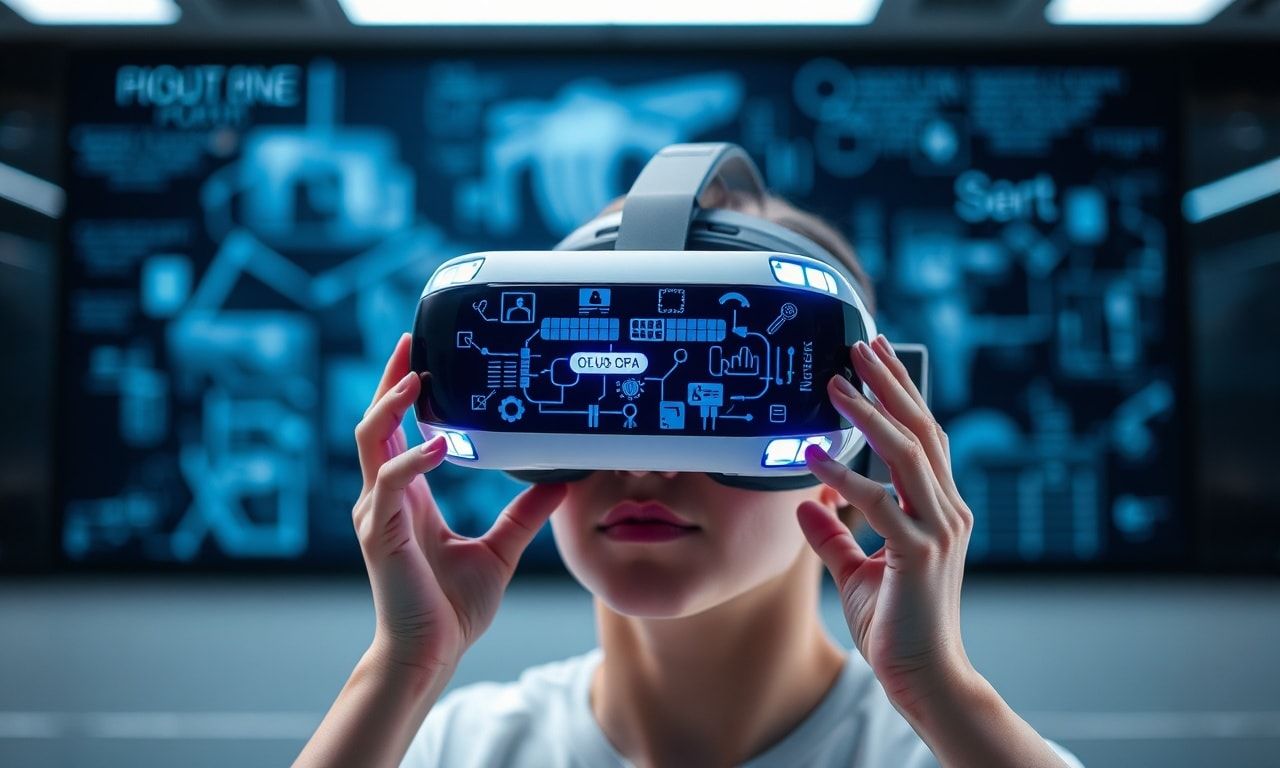
The Dawn of a New Era
Virtual reality (VR) has come a long way since its inception. What was once a concept relegated to the pages of science fiction novels is now an integral part of our daily lives. From gaming to education, VR technology has permeated various sectors, offering immersive experiences that were once thought impossible. The journey of VR from a futuristic dream to a tangible reality is a testament to human ingenuity and technological advancement.
The roots of VR can be traced back to the 1930s, with the creation of the first stereoscopic displays. However, it was not until the 1960s that the concept of VR began to take shape. The Sensorama, developed by Morton Heilig in 1962, was one of the earliest examples of an immersive, multi-sensory experience. This device combined 3D visuals, sound, and even smells to create a fully immersive environment. Although rudimentary by today’s standards, the Sensorama laid the groundwork for future developments in VR technology.
The Rise of Modern VR
The 1990s marked a significant turning point in the evolution of VR. The introduction of the first consumer-grade VR headsets, such as the Virtual Boy by Nintendo, brought VR technology into the mainstream. Despite its limitations, the Virtual Boy sparked public interest and paved the way for more advanced VR systems. The late 1990s and early 2000s saw the development of more sophisticated VR technologies, including motion tracking and haptic feedback, which enhanced the immersive experience.
One of the most notable advancements in modern VR is the development of high-resolution displays and powerful processing units. These advancements have enabled the creation of highly detailed and lifelike virtual environments. Additionally, the integration of VR with other technologies, such as artificial intelligence and the Internet of Things (IoT), has opened up new possibilities for immersive experiences. For instance, VR can now be used in conjunction with AI to create personalized and adaptive virtual environments that respond to the user’s actions and preferences.
The Impact of VR on Gaming
One of the most significant impacts of VR technology has been in the gaming industry. VR gaming offers a level of immersion and interactivity that traditional gaming cannot match. Players can step into the shoes of their favorite characters and explore virtual worlds in a way that feels incredibly real. This has led to the development of a wide range of VR games, from action-packed adventures to immersive simulations.
For those looking to enhance their gaming experience, investing in one of the best VR headsets for immersive gaming can make a world of difference. These headsets offer high-resolution displays, wide fields of view, and advanced tracking systems that ensure a seamless and immersive gaming experience. Whether you’re a casual gamer or a hardcore enthusiast, there’s a VR headset out there that can take your gaming to the next level.
VR in Education and Training
Beyond gaming, VR has found applications in education and training. Virtual reality provides a safe and controlled environment for students and trainees to practice and learn. For example, medical students can use VR simulations to practice surgical procedures without the risk of harming real patients. Similarly, pilots can use VR to simulate flight conditions and improve their skills.
The use of VR in education extends beyond professional training. Schools and universities are increasingly incorporating VR into their curricula to provide students with immersive learning experiences. For instance, history students can take virtual field trips to ancient civilizations, while science students can conduct virtual experiments in a risk-free environment. This not only makes learning more engaging but also helps students retain information more effectively.
The Future of VR
The future of VR is bright and full of possibilities. As technology continues to advance, we can expect VR to become even more immersive and interactive. One of the most exciting developments in VR is the integration of haptic feedback technology. Haptic feedback allows users to feel physical sensations in response to their actions in the virtual environment, enhancing the overall immersive experience.
Another area of growth for VR is in social interactions. Virtual reality can be used to create virtual social spaces where people can meet, interact, and collaborate in a virtual environment. This has significant implications for remote work, as it allows teams to collaborate and communicate more effectively, regardless of their physical location. Additionally, VR can be used to create virtual events and conferences, providing a more engaging and interactive experience for attendees.
As VR technology continues to evolve, it is clear that it will play an increasingly important role in our lives. From gaming and education to social interactions and professional training, VR offers a wide range of applications that can enhance our experiences and improve our skills. The journey of VR from a futuristic dream to a tangible reality is a testament to human ingenuity and technological advancement, and the future of VR is sure to be just as exciting.
Dive into the creative realm of visual communication with our latest guide, exploring graphic design software, and discover the tools that bring ideas to life.
Ever wondered how technology shapes our daily lives? Discover the impact of computer science and programming in everyday technological advancements.
If you’re eager to enhance your online presence and reach a wider audience, our guide on modern digital marketing strategies offers an in-depth look at the latest techniques and tools.